Fleas, Ticks and Leishmaniasis in Portugal: A Year-Round Prevention Guide
Leishmaniasis is endemic in Portugal and has no cure, only lifelong management. Ticks here carry Ehrlichia and Babesia year-round. Here is the honest, groomer-and-science-checked prevention stack your dog needs in Lisbon.

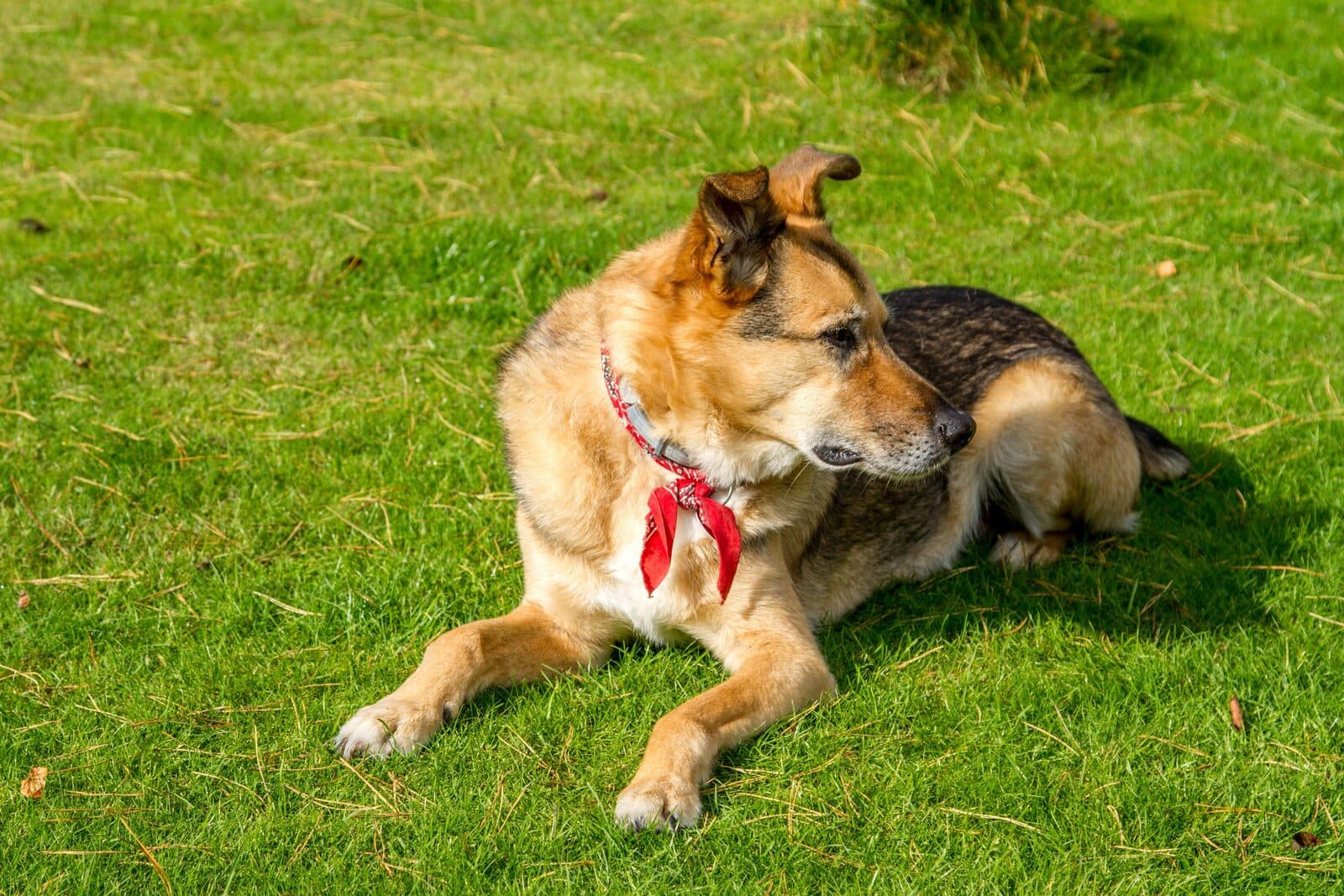
To protect your dog from the parasite risks specific to Portugal, you need more than a monthly flea pill. Portugal is Mediterranean, and that means leishmaniasis, a sandfly-borne disease that has no cure, is endemic from Lisbon down through the Alentejo. On top of that, ticks here carry Ehrlichia canis and Babesia year-round because the winters are mild. A proper prevention stack combines a repellent collar or topical (Scalibor, Advantix, or Vectra 3D), the Letifend leishmaniasis vaccine, a monthly or three-monthly flea and tick product, and a quick skin check after every walk. Anything less leaves gaps the Mediterranean will find.
Why Portugal Is Different
If you moved here from Northern Europe, your parasite playbook is out of date the day you land. A UK dog wearing a monthly oral product is well-protected at home. The same dog in Lisbon is not.
The Mediterranean climate does three things that matter for parasites. First, it keeps average temperatures high enough that ticks stay active almost year-round. In London a hard frost kills a lot of ticks. In Lisbon we do not get that frost. Rhipicephalus sanguineus, the brown dog tick, reproduces indoors and in kennels and keeps going through the winter.
Second, it gives sandflies a long season. Phlebotomine sandflies in the Mediterranean basin are active from roughly April to October, with peak activity on warm summer nights. These insects are the vector for Leishmania infantum, the parasite that causes canine leishmaniasis. No sandfly, no leishmaniasis. And they are here.
Third, it means exotic tick-borne pathogens that are rare in Northern Europe are routine here. Ehrlichia canis, Babesia vogeli, Hepatozoon canis. A Lisbon vet sees these every month. A vet in Copenhagen might go years without one.
Expats arriving with Northern EU prevention habits, often just Frontline or a single oral product, frequently find out the hard way that those tools do not cover sandflies. The baseline risk in Portugal is higher from day one. You need a bigger stack.
Leishmaniasis: The One Every Lisbon Owner Must Know
This is the disease that shapes the whole prevention plan in Portugal. If you understand leishmaniasis, the rest of the stack makes sense.
What it is
Leishmaniasis in dogs is caused by the protozoan parasite Leishmania infantum. The vector is the female sandfly, most often Phlebotomus perniciosus in Portugal and Spain. A sandfly bites an infected animal, picks up the parasite, bites your dog weeks later, and the parasite is transmitted.
It is a zoonotic disease, meaning humans can also be infected. But the critical point is this: you do not catch leishmaniasis directly from your dog. You cannot get it by hugging them, sharing a bed, or being licked. The sandfly is the bridge. A sandfly has to bite your dog, then bite you. Immunocompromised people are at higher risk, so if anyone in the household has a weak immune system, that is a conversation to have with your own doctor, not just your vet.
Where you are at risk in Portugal
Leishmaniasis is endemic across most of the country. A 2022 Portuguese seroprevalence study put the overall rate in dogs at around 12.5 percent, with regional variation. Older national data showed Alentejo at about 10 percent, Lisbon and the Tagus Valley around 6 percent, the Centre around 7.8 percent, the Algarve 4.7 percent, and the North 3.8 percent. Recent research also suggests climate change is shifting these patterns, with infections rising in northern regions that used to be considered lower risk.
Lisbon is not a low-risk city. Six percent of dogs with antibodies is not rare. If you walk your dog along the river at dusk in July, you are walking in sandfly territory.
Symptoms in dogs
Leishmaniasis is slow and sneaky. Incubation runs from months to years, so a dog infected this August may not show signs until next autumn. The classic signs, in roughly the order owners notice them:
- Dry, flaky skin on the face, ears, and around the eyes. Small crusts on ear tips.
- Hair loss around the muzzle and eyes, sometimes called spectacle alopecia.
- Overgrown, curved nails (onychogryphosis). This one is very characteristic. Nails grow abnormally fast.
- Weight loss and muscle wasting, especially over the head (temporal muscles look sunken).
- Enlarged lymph nodes.
- Nosebleeds, lethargy, pale gums in more advanced cases.
- Kidney disease (proteinuria progressing to chronic kidney failure) in the late stage. This is often what the disease ultimately causes.
Diagnosis
Diagnosis is a vet job. It typically combines clinical signs with serology (IFAT or ELISA for Leishmania antibodies), sometimes confirmed with PCR or cytology from lymph node or bone marrow. Blood work will often show high globulins and low albumin, anemia, and proteinuria on urinalysis. Do not try to self-diagnose this at home. If you see the signs above, you go to the vet.
Treatment and prognosis
Here is the hard truth. There is no cure. A dog with leishmaniasis has the parasite for life. What modern veterinary medicine can do is manage the disease so the dog lives a good, often long life. According to LeishVet guidelines and published protocols, first-line management typically combines a leishmanicidal drug (meglumine antimoniate or miltefosine) with allopurinol, a purine analog that suppresses parasite replication. Treatment is long-term and sometimes lifelong. Monitoring blood work and kidney function is ongoing.
Dosages are not something a blog should give. Your vet will build a protocol for your specific dog. What you can control is whether your dog gets infected in the first place. That brings us to the stack.

The Sandfly Prevention Stack That Works
A proper leishmaniasis prevention plan has three layers: vector protection, vaccine, and behavior. Using only one is not enough. The current scientific consensus, echoed by LeishVet and the Portuguese veterinary community, is that vector protection is the foundation and the vaccine is a second layer on top.
Vector protection: collars and topicals
These products kill or repel sandflies so they do not feed on your dog. This is the single most important layer.
- Scalibor (MSD Animal Health, deltamethrin collar). The best-studied sandfly-repellent collar. Peer-reviewed data in Medical and Veterinary Entomology has shown anti-feeding efficacy of 94 percent or higher against Phlebotomus perniciosus for up to 364 days after fitting. Labelled for 6 months of sandfly protection in most EU markets. Commonly recommended in Portugal.
- Advantix (Elanco, imidacloprid plus permethrin spot-on). Topical, applied monthly. Studies have reported anti-feeding efficacy against sandflies in the high 80s to upper 90s of percentages within the first two months per dose. Good for dogs who do not tolerate a collar.
- Vectra 3D (Ceva, dinotefuran plus permethrin plus pyriproxyfen spot-on). Monthly topical with documented sandfly repellency. A useful alternative to Advantix.
- Seresto (Elanco, imidacloprid plus flumethrin collar). Labelled for up to 8 months against ticks and fleas, but its evidence base for sandfly repellency is weaker than Scalibor or Advantix. Do not rely on a Seresto alone for leishmaniasis prevention. Use it for ticks and fleas and layer a dedicated sandfly product on top if needed.
One warning. All of these products contain permethrin or deltamethrin (pyrethroids), which are safe for dogs but highly toxic to cats. If you have both a dog and a cat in the house, coordinate with your vet. There are cat-safe parallel options.
Vaccine: reduces disease, does not block infection
Vaccination is the second layer. It reduces the probability that an infected dog will progress to clinical disease. It does not stop the sandfly from injecting the parasite. That is why the vector layer is not optional.
- Letifend (LETI Pharma, recombinant Protein Q). Single annual dose. As of 2026, Letifend is the only leishmaniasis vaccine available in the EU. CaniLeish (Virbac) was withdrawn from the European market in 2021 for commercial reasons.
Published efficacy for the European leishmaniasis vaccines has been reported in the range of roughly 68 to 80 percent against active infection and 92 to 95 percent against clinical disease, depending on the study. Your vet will run an antibody test before vaccinating to make sure the dog is not already infected.
Behavior
Sandflies are active at dusk and through the first hours of the night, and again at dawn. They prefer warm nights above 16 degrees Celsius.
- Bring your dog indoors from dusk until after sunrise during sandfly season (roughly April to October).
- Use fine mesh insect screens on open windows, especially bedroom windows where your dog sleeps. Standard mosquito mesh is usually fine enough for sandflies, but fine mesh is safer.
- Avoid sleeping outdoors with your dog during sandfly season, especially near rivers, stone walls, or gardens with leaf litter.
Expected cost
Based on Portuguese pet pharmacy and vet clinic pricing ranges as of 2026, a typical annual vector plus vaccine stack for a medium dog runs roughly 100 to 180 euros, plus the vet consult for the vaccine. It is not cheap, but compared to the cost of managing a lifelong disease (monthly medications, quarterly blood work, eventual kidney care), it is nothing. Ask your clinic for their package pricing, several do offer a bundled annual plan.
Ticks in Portugal: Species, Diseases, Removal
If leishmaniasis is the Mediterranean disease every Lisbon owner needs to know, ticks are the everyday problem that every groomer and every dog walker in Lisbon finds almost daily.
The tick species you will actually encounter
- Rhipicephalus sanguineus (brown dog tick). By far the most common tick on dogs in Portugal. In surveillance data from peri-domestic areas it consistently accounts for 57 to 82 percent of ticks found. It is the main vector for Ehrlichia canis , Babesia vogeli , and Hepatozoon canis , and can also transmit Anaplasma platys and Rickettsia conorii (Mediterranean spotted fever).
- Ixodes ricinus. The castor bean tick, the main vector of Borrelia burgdorferi (Lyme disease) in Europe. Rising in Portuguese surveillance from about 3.5 percent in 2014 to 10.5 percent in 2023. Lyme is less common here than in Northern Europe but it is real.
- Dermacentor reticulatus. Vector of Babesia canis. Present but less abundant than Rhipicephalus in urban and peri-urban Portugal.
The diseases, briefly
- Ehrlichiosis (Ehrlichia canis): acute fever, lethargy, swollen lymph nodes, bleeding tendencies including nosebleeds, and low platelets. Treated with doxycycline under vet supervision.
- **Babesiosis (Babesia spp.)**: pale gums, jaundice, dark urine, weakness. Parasites destroy red blood cells. Can be rapidly life-threatening.
- Hepatozoonosis (Hepatozoon canis): muscle pain, fever, lethargy, often detected incidentally. Transmitted when the dog eats the infected tick, not just when bitten, which is why post-groom tick inspection matters.
- Lyme (Borrelia burgdorferi): lameness, fever, less often kidney involvement. Less common here but present.
None of these are to be diagnosed by Google. Any unexplained fever, pale gums, dark urine, unusual bleeding, or profound lethargy in the days or weeks after a tick bite means a vet visit, same day.
How to remove a tick (the only method that is safe)
This is the only part of the article where the method matters more than the words. Do it like this:
- Use fine-tipped tweezers or a purpose-built tick hook (O'Tom Tick Twister is widely available in Portuguese pharmacies and pet shops).
- Grip the tick as close to the dog's skin as possible. Grip the head, not the swollen body.
- Pull upward with steady, even pressure. Do not twist, do not jerk, do not yank.
- Do not squeeze the body of the tick. If you crush it, you push gut contents (and potentially pathogens) into the bite wound.
- Disinfect the bite site with an antiseptic (chlorhexidine or iodine is fine) and wash your hands.
- If the tick looks unusual or the dog was in a high-risk area, save the tick in a sealed bag or a small jar with a little alcohol. Your vet may want to identify the species.
- Monitor the bite site and your dog for the next 3 weeks. Any fever, lethargy, lameness, or swollen lymph nodes, call the vet.
What not to do, ever
The old hot-match-on-the-tick trick is a myth and it is actively harmful. Same for petroleum jelly, nail polish, alcohol, or any oil. Testing has shown none of these reliably make the tick detach, and all of them can agitate the tick and make it regurgitate gut contents into the bite. That is exactly how you increase the chance of pathogen transmission. The CDC is explicit about this, and so is every evidence-based veterinary body in Europe. Tweezers or a tick hook. That is the whole list.

Fleas: Smaller Problem, Still a Problem
Fleas do not carry leishmaniasis or Ehrlichia, but they are not harmless. The two real reasons to keep fleas off your dog in Portugal:
- Flea allergy dermatitis (FAD). This is the most commonly diagnosed allergic skin disease in dogs, by a wide margin. Some surveys put it at around 40 percent of pet dogs. A single flea bite can set off days of furious itching, hot spots, and self-inflicted wounds. A Lisbon dog who suddenly will not stop scratching the base of the tail in summer is almost always dealing with fleas, not some exotic problem.
- Tapeworm (Dipylidium caninum). The most common tapeworm in dogs is transmitted when the dog swallows an infected flea, usually while chewing at an itch. Flea control is tapeworm control.
Products that work (all EU-licensed for dogs)
- Oral isoxazolines : Bravecto (fluralaner, protection for roughly 12 weeks), NexGard (afoxolaner, monthly), Simparica (sarolaner, monthly), Credelio (lotilaner, monthly). All kill fleas and ticks. The EU regulator (EMA) and US FDA have both noted rare neurologic side effects in this class, so discuss with your vet if your dog has a history of seizures.
- Topicals : Frontline (fipronil), Stronghold/Revolution (selamectin), Advantage (imidacloprid). Monthly spot-ons with long track records.
- Environmental (home) products : if you get an infestation, an insect growth regulator (IGR) like methoprene or pyriproxyfen in a household spray breaks the flea life cycle in carpets and bedding. Wash all dog bedding at 60 degrees.
One small piece of local good news: Lisbon homes are mostly tiled, not carpeted. That makes flea infestations much easier to clear here than in a UK flat with wall-to-wall carpet. Vacuum often, wash bedding hot, and treat the dog. The indoor side of the battle is usually quick.
The Prevention Calendar: What to Do Each Month
A realistic month-by-month Lisbon plan looks roughly like this. Adjust with your vet for your specific dog.
- January to March : Keep flea and tick oral (or topical) going, ticks are still active in Lisbon winters. Indoor life dominates, sandflies are dormant. No sandfly-specific action needed yet.
- April : The annual reset. Letifend vaccine booster with your vet. Fit a fresh Scalibor collar (or start monthly Advantix or Vectra 3D). Continue flea and tick product. Start checking the dog after every walk.
- May to October : Peak parasite season. All three layers active: vector collar or topical, monthly or three-monthly flea and tick, and nightly behavior (dog indoors from dusk). Every walk ends with a skin check, especially after Monsanto, Sintra, or anywhere with long grass and stone walls.
- November : Sandfly activity winds down but ticks do not. Keep the tick product going. Scalibor has roughly wrapped its 6-month label by now, so decide with your vet whether to replace or swap to a topical for the winter.
- December : Flea control continues year-round. Review the annual stack with your vet ahead of April.
If you travel with your dog to the Alentejo, Algarve, or any rural inland area in summer, raise the vigilance further. Sandfly populations there are higher than in urban Lisbon.
Groomer's-Eye View: What We Find on Your Dog
I have been grooming dogs for over twelve years, more than twenty thousand dogs through my hands. I see the same things week after week, and most of them the owner has not noticed yet.
Ticks. Always on a dog who has been in Monsanto, Sintra, or any walk through long grass in the last few days. The favourite hiding spots, in the order I find them: around the base of the ears, inside the ear flap, under the collar line on the neck, in the armpits, on the soft belly, and between the toes. Owners check the back, which is the easy place. Ticks do not sit on the back. They go where the skin is thin and warm.
Early leishmaniasis signs. The two that owners miss most often are overgrown, strangely curved nails (onychogryphosis) and thinning hair around the eyes and nose. On a dog where the owner says grooming has been regular, suddenly the nails have outgrown the schedule by weeks, I pay attention. Same with small dry crusts on the tips of the ears or the bridge of the nose that do not look like a normal rub wound. These are not groomer diagnoses, they are groomer flags. My job is to tell you what I see. Your vet's job is to test.
Flea dirt versus dandruff. Flea dirt is digested blood. It looks like black pepper specks on the skin, especially at the base of the tail. Put a speck on a damp white paper towel. If it dissolves into a rust-red smear, that is flea dirt. Dandruff stays white. I do this test in the salon regularly and it is the fastest way to confirm a flea problem before you see a live flea.
What we do when we find something. We finish the groom, we show you what we found, and we tell you to book your vet. We do not prescribe. We do not treat parasites for you. The groomer's role here is the extra set of eyes your dog has between vet visits. Every full-body groom at PawsN'Surf includes a skin and parasite check as part of the bath and finishing work. That is how we have caught early signs on more than one regular client, and they went to the vet earlier than they would have otherwise.
When to Go to the Vet Immediately
Prevention is most of this article. But sometimes you miss the window and need to act. Go to the vet, same day, if any of these:
- A tick has been attached more than 24 hours, or you find an engorged tick, plus the dog is running a fever or seems unusually tired. Ehrlichia and Babesia both transmit more reliably the longer the tick has fed.
- Any unexplained weight loss combined with skin lesions, hair loss around the eyes, or strangely overgrown nails. Your vet will likely run a Leishmania serology panel.
- Pale or yellow-tinged gums, dark or red-tinged urine, collapse. This is a babesiosis emergency. Do not wait.
- Bleeding that does not stop. Nosebleeds that last more than a few minutes, bruising, or bleeding gums. Low platelets are a classic ehrlichia sign.
- Lethargy plus a fever of unknown origin in a dog recently in the countryside, the Alentejo, or any area with heavy tick load.
Lisbon has many excellent veterinary clinics, including several with 24-hour emergency cover. Find yours in advance, save the phone number, do not improvise when your dog is sick at 11 pm.