Top 10 Dog Breeds That Need Hand Stripping
Not sure if your dog needs hand stripping? Here are 10 breeds with wire coats that benefit most from this traditional grooming technique.

Hand stripping is the correct grooming method for wire-coated breeds such as the West Highland White Terrier, the Airedale Terrier and the Standard Schnauzer, along with Border Terriers, Wire Fox Terriers, Scottish Terriers, wire-haired Dachshunds and Brussels Griffons. These dogs carry a double coat with hard guard hairs that must be pulled out by the root every 6 to 12 months to keep their true color, texture and natural weather resistance.
Why These Breeds Need Hand Stripping
Before we dive into the list, let's get clear on why hand stripping exists in the first place.
Wire-coated dogs have a double coat: a coarse, protective outer layer and a softer, insulating undercoat. The outer guard hairs grow to a certain length, die off, and loosen at the root. But unlike smooth-coated breeds, these dead hairs don't simply fall out. They sit in the follicle, waiting to be pulled.
Hand stripping does exactly that. It removes the dead coat from the root, making room for a fresh, wiry hair to grow in its place. The result? A coat that's vibrant in color, correct in texture, and naturally weather-resistant.
Clipping, on the other hand, just cuts the hair at the surface. The dead root stays in the follicle, and over time, only the softer undercoat grows through. After several clipping sessions, many wire-coated dogs end up with a coat that's dull, fluffy, and nothing like their breed standard.
Does that mean clipping is terrible? Not necessarily. For some pet owners, a clipped coat is perfectly fine. But if you want your wire-coated dog to look and feel their best, hand stripping is the gold standard.
Now, the breeds.
1. Schnauzer (Miniature, Standard, and Giant)
The Schnauzer is probably the most recognized wire-coated breed in the world, and for good reason. With their distinguished beards, bushy eyebrows, and that sharp, alert expression, Schnauzers are the poster dogs for hand stripping.
Coat characteristics: Dense, wiry outer coat with a close-fitting undercoat. The texture should feel hard and bristly when properly maintained.
Why hand stripping works best: That classic salt-and-pepper coloring that Schnauzers are famous for? It depends entirely on hand stripping. The banded color pattern in each individual hair only shows when the coat is pulled from the root and regrows naturally. Clip a salt-and-pepper Schnauzer repeatedly, and within a few sessions, you'll notice the coat turning a uniform silver-grey with a soft, cottony feel.
Stripping frequency: Every 6-8 weeks for a maintained coat, or on a rolling schedule where different sections are stripped at different times.
If you clip instead: The coat gradually loses its crisp markings and wiry texture. The beard and eyebrows may become wispy rather than full. It's not harmful, but it's a very different look from a properly stripped Schnauzer.
Pro tip: The eyebrows and beard on a Schnauzer need careful hand shaping, not just stripping. Find a groomer who understands Schnauzer head furnishings - it makes all the difference in achieving that iconic expression.
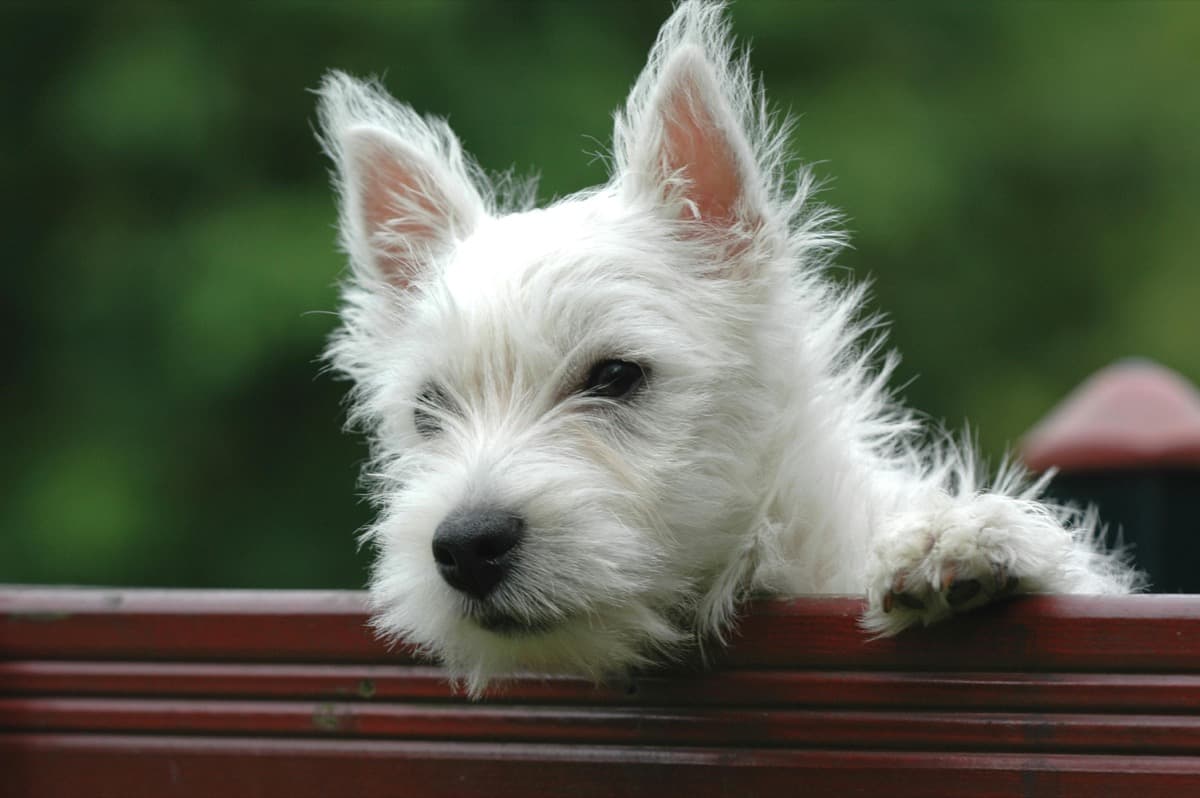
2. West Highland White Terrier (Westie)
The Westie's brilliant white coat is one of the breed's most striking features, and hand stripping is what keeps it looking its absolute best. These cheerful little Scots have a double coat that's meant to be hard and weather-proof on the outside and soft underneath.
Coat characteristics: A harsh, straight outer coat about 5 cm long, with a short, soft, close undercoat. The outer coat should feel almost crisp to the touch.
Why hand stripping works best: Hand stripping keeps the outer coat white, bright, and hard-textured. It also helps the coat lay flat against the body in the correct Westie silhouette. A well-stripped Westie practically glows.
Stripping frequency: Every 6-8 weeks. Westies grow coat at a moderate pace, and regular stripping keeps the shape tidy between sessions.
If you clip instead: The coat often turns yellowish or cream-colored over time, and the texture becomes soft and fluffy - almost cottony. Clipped Westies tend to look rounder and less defined than their stripped counterparts.
Pro tip: Pay special attention to the head. A Westie's head should be shaped into a round "chrysanthemum" shape by careful hand work. This is one of the hardest parts to get right, but it's what gives the Westie that irresistible face.
3. Wire Fox Terrier
If there's one breed that hand stripping was practically invented for, it's the Wire Fox Terrier. This is the classic terrier - alert, elegant, and wearing a coat so tight and sculpted it looks like it was tailored by hand. (Because it was.)
Coat characteristics: Dense, very wiry hair with a twisted texture. The coat lies flat and close, giving the dog a clean, chiseled outline. Underneath is a shorter, softer layer.
Why hand stripping works best: The Wire Fox Terrier's entire look depends on precision stripping. The tight jacket, clean shoulders, and smooth transition between different coat lengths all come from meticulous hand work. This breed is one of the most technically demanding to groom properly.
Stripping frequency: Every 6-8 weeks, with a rolling strip being the preferred method. Many show groomers work on Wire Fox Terriers weekly, stripping small amounts to keep the coat in constant rotation.
If you clip instead: The sculpted silhouette disappears. Clipped Wire Fox Terriers tend to look puffy and lose the sharp definition that makes this breed so elegant in motion.
Pro tip: If you're learning hand stripping, the Wire Fox Terrier is not the place to start. This breed requires advanced skills and a deep understanding of coat growth patterns. Start with an easier breed (like the Border Terrier) and work your way up.
4. Border Terrier
The Border Terrier is the perfect introduction to the world of hand stripping. These sturdy, no-nonsense little dogs have a coat that practically asks to be stripped - it loosens clearly when ready, and the results are immediately satisfying.
Coat characteristics: A harsh, dense outer coat with a close undercoat. The coat lies close to the body and should feel rough and broken when properly maintained. Border Terriers come in red, grizzle and tan, blue and tan, or wheaten.
Why hand stripping works best: The Border's coat is relatively short and uniform across the body, making it straightforward to strip. Hand stripping keeps their colors rich and their coats weather-resistant, which matters for a breed that was originally bred to work alongside Foxhounds in all conditions.
Stripping frequency: Every 8-12 weeks. Borders are lower-maintenance than many terriers, and their coats are forgiving of slightly longer gaps between sessions.
If you clip instead: The coat softens and loses its harsh texture. Colors tend to fade, and the coat may start to curl slightly instead of lying flat. Some Borders handle clipping better than others, but the difference is still noticeable.
Pro tip: Border Terriers are the ideal breed to practice hand stripping on if you're an owner wanting to learn the technique yourself. Their coat gives clear signals when it's ready to come out, and you can strip the whole dog in under an hour once you get the hang of it.
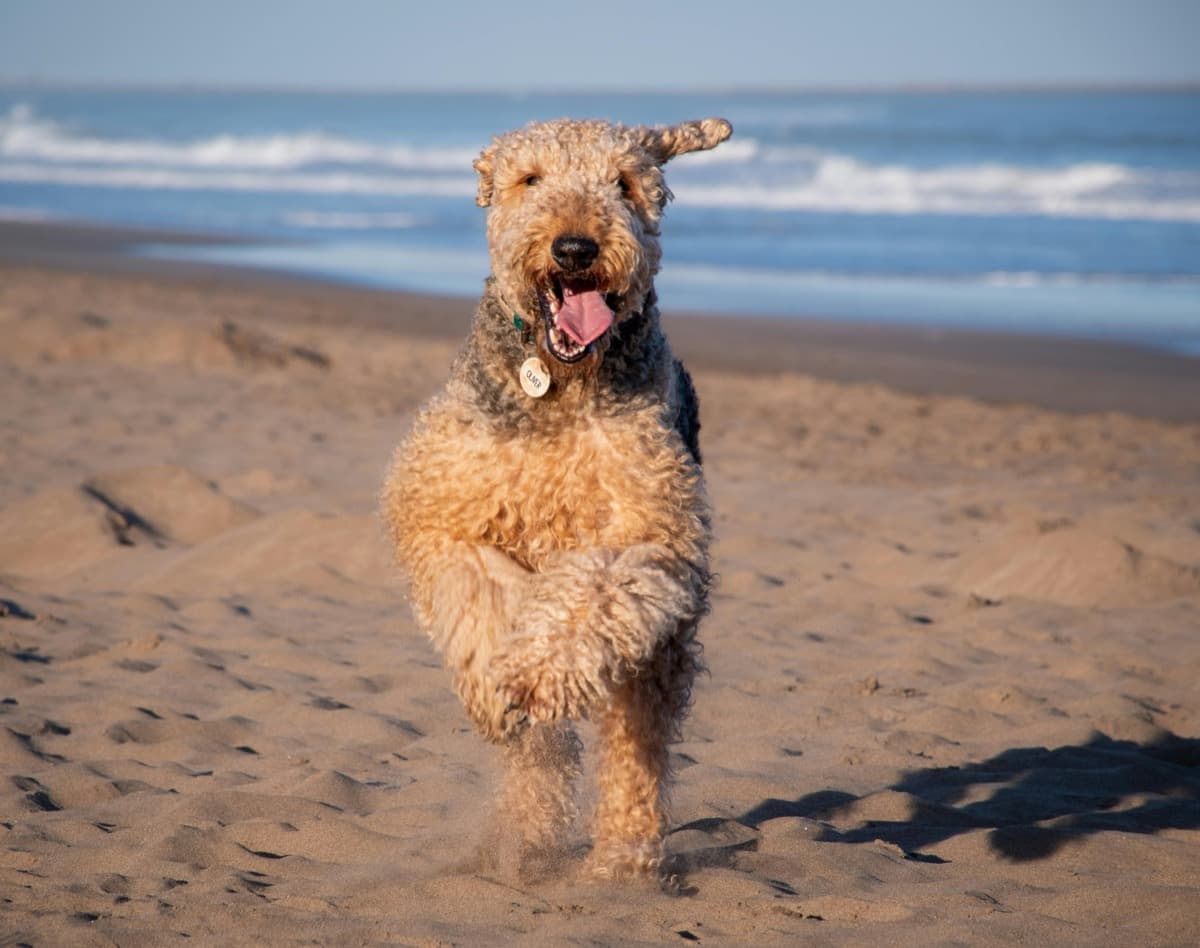
5. Airedale Terrier
Known as the "King of Terriers," the Airedale is the largest of all terrier breeds, standing up to 60 cm at the shoulder. That means a lot of surface area to hand strip. It's a commitment, but owners and groomers who put in the work are rewarded with a stunningly handsome dog.
Coat characteristics: Hard, dense, and wiry outer coat, with a shorter, softer undercoat. The tan areas (legs, chest, head) have a slightly softer texture than the dark saddle on the back. The classic Airedale coloring is black or dark grizzle saddle with rich tan elsewhere.
Why hand stripping works best: The Airedale's two-tone coloring depends on hand stripping to stay vivid. The dark saddle should be deep black or dark grizzle, and the tan should be warm and rich. Clipping dulls both.
Stripping frequency: Every 6-8 weeks. Due to the Airedale's size, full-body hand stripping is a significant time investment, often taking several hours.
If you clip instead: The saddle fades to grey, the tan becomes pale, and the coat loses its protective qualities. Many Airedales end up with a uniform faded color rather than the striking contrast they should have.
Pro tip: Because of the time involved, many Airedale owners opt for a "pet strip" where the body is stripped but the legs and head are tidied with scissors. This is a reasonable middle ground that still gives you most of the benefits.
6. Cairn Terrier
The Cairn Terrier's claim to pop culture fame? Toto from The Wizard of Oz was a Cairn. These spirited little dogs from the Scottish Highlands have a naturally scruffy, outdoorsy look that comes from a well-maintained wire coat.
Coat characteristics: A profuse, hard outer coat with a short, soft, close undercoat. Cairns come in cream, wheaten, red, grey, or nearly black. Their coats are meant to look natural and slightly tousled, not overly sculpted.
Why hand stripping works best: The Cairn's coat should look rugged and workmanlike, not primped. Hand stripping maintains that rough texture while keeping the coat healthy and free of excess dead hair. Unlike some terriers, the Cairn's trim is relatively natural-looking, making it accessible for both groomers and owners.
Stripping frequency: Every 8-10 weeks. Cairns are fairly low-maintenance in the stripping department, though regular brushing between sessions is important.
If you clip instead: The coat loses its harsh weather-resistant quality and becomes soft and open. Colors may lighten, and the coat tends to grow in a uniform fluff rather than the natural, slightly messy texture that defines the breed.
Pro tip: Cairn Terriers' coats are meant to look natural, not sculpted. If your groomer is making your Cairn look like a miniature Schnauzer, they're over-styling. A good Cairn strip looks effortless.
7. Scottish Terrier
The Scottie's unmistakable silhouette - long, low body with a distinctive skirt, bushy eyebrows, and pointed ears - is one of the most iconic in the dog world. Achieving that silhouette takes skilled hand work across several different coat zones.
Coat characteristics: A hard, wiry outer coat with a soft, dense undercoat. The back coat is relatively short and tight, while the skirt (the longer hair on the chest and sides), legs, and beard are left longer to create the breed's signature outline.
Why hand stripping works best: The Scottish Terrier requires different techniques on different parts of the body. The back and sides are stripped short and tight, the skirt is shaped to hang straight and full, and the head is sculpted to create those dramatic eyebrows and beard. This layered approach only works with hand stripping and scissoring.
Stripping frequency: Every 6-8 weeks. The Scottie's multiple coat zones mean that an experienced groomer may use a rolling strip, working on different areas at different times.
If you clip instead: The tight, flat back coat becomes fluffy, and the skirt loses its straight, heavy drape. The overall effect is a softer, rounder dog that lacks the Scottie's characteristic angularity.
Pro tip: The Scottish Terrier's eyebrows are a defining feature. They should project forward over the eyes, creating that stern, dignified expression. Discuss eyebrow shaping specifically with your groomer - it's a detail that separates a good Scottie trim from a great one.
8. Wire-Haired Dachshund
Here's a breed that often gets overlooked for hand stripping. Most people picture Dachshunds as smooth-coated or long-haired, but the wire-haired variety is a distinct and charming version with a coat that absolutely benefits from stripping.
Coat characteristics: Short, thick, rough outer coat with a finer, softer undercoat. Wire-Haired Dachshunds have a noticeable beard and bushy eyebrows, giving them an almost Schnauzer-like expression on an unmistakably Dachshund body.
Why hand stripping works best: Hand stripping maintains the rough, flat-lying coat and keeps those charming facial furnishings looking their best. The wiry texture is what gives this variety its distinct personality compared to its smooth and long-haired siblings.
Stripping frequency: Every 8-10 weeks. The Wire-Haired Dachshund's smaller size means stripping sessions are relatively quick.
If you clip instead: The coat softens and may become slightly wavy. The beard and eyebrows can become sparse or wispy. Some Wire-Haired Dachshunds that are repeatedly clipped start to look more like a scruffy version of the smooth variety rather than a true wire-hair.
Pro tip: Many groomers who work primarily with terriers are also excellent with Wire-Haired Dachshunds, since the principles are the same. If your regular groomer doesn't know the breed, ask a terrier specialist.
9. German Wirehaired Pointer
Moving away from terriers, the German Wirehaired Pointer (GWP) is a sporting breed with a thick, functional coat designed to protect it in the field. This is a dog built for work, and its coat reflects that.
Coat characteristics: Dense, wiry, flat-lying outer coat about 2.5-5 cm long, with a dense undercoat that thickens in winter and thins in summer. The coat covers the entire body and provides protection against rough cover, cold water, and harsh weather.
Why hand stripping works best: For working GWPs, coat integrity is not just cosmetic - it's functional. Hand stripping maintains the water-resistant, thorn-proof quality of the wire coat. Hunting dog owners in particular value hand stripping because it keeps the coat performing at its best in the field.
Stripping frequency: Every 8-12 weeks, depending on the season and whether the dog is actively working. Many GWP owners strip more frequently during hunting season.
If you clip instead: The coat loses much of its weather-resistance and protective quality. For a pet-only GWP, this may not be a major concern, but for working dogs, it can make a real difference in the field.
Pro tip: GWPs shed their undercoat seasonally, and a thorough strip at the start of spring and fall helps manage this transition. Combine stripping with a good undercoat rake for the best results.
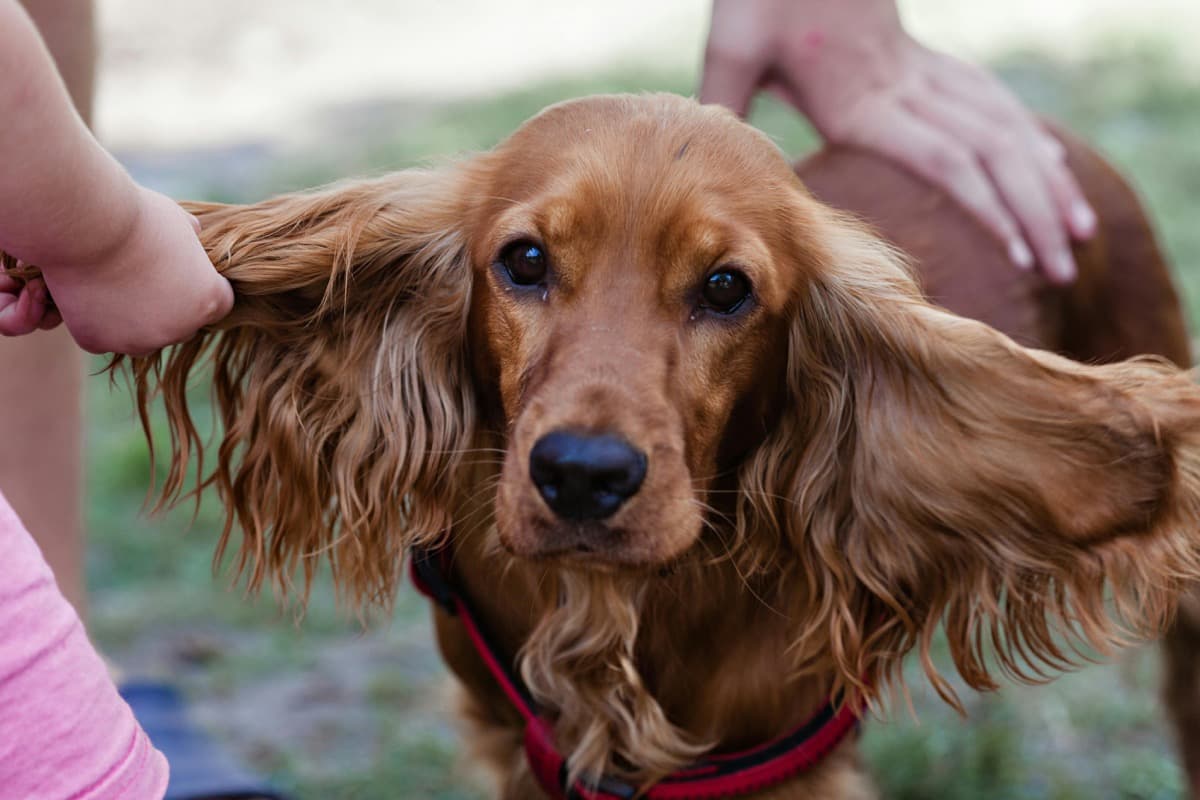
10. English Cocker Spaniel (Show Coat)
Surprised to see a Spaniel on this list? Most people are. While pet Cockers are typically clipped all over, the English Cocker Spaniel's back and saddle area can (and in show circles, should) be hand stripped.
Coat characteristics: The English Cocker has a flat, silky coat on the body with longer feathering on the ears, chest, belly, and legs. The back coat has a slightly harder texture than the feathering, and this is the area that responds to hand stripping.
Why hand stripping works best: Stripping the saddle area keeps the back coat flat, tight, and close-lying, which creates a beautiful contrast with the flowing feathering below. In the show ring, this contrast is essential. It gives the English Cocker that sleek, athletic look while still showing off the breed's elegant furnishings.
Stripping frequency: A rolling strip every 4-6 weeks to keep the back coat in constant rotation. The feathering is maintained with scissors and thinning shears.
If you clip instead: The back coat often stands up slightly instead of lying flat, and it can develop a fuzzy texture. For pet dogs, this is perfectly acceptable, and most owners will never notice. But side-by-side with a stripped Cocker, the difference is clear.
Pro tip: If you have an English Cocker and want to try hand stripping, start with just the saddle area. It's a small section, easy to manage, and you'll quickly see whether your dog's coat responds well. Not all Cocker coats are equally strippable - coats that are too silky may not pull cleanly.
Honorable Mentions
The 10 breeds above are the most common candidates for hand stripping, but they're not the only ones. Here are several other breeds with wire or semi-wire coats that benefit from the technique:
- Irish Terrier - one of the most striking terriers when properly hand stripped, with a tight red coat
- Welsh Terrier - similar structure to the Wire Fox Terrier but slightly less demanding to groom
- Lakeland Terrier - compact terrier with a dense, wiry coat and a distinctive saddle pattern
- Norfolk and Norwich Terriers - small but with true wire coats that respond beautifully to stripping
- Irish Wolfhound - yes, this gentle giant has a rough coat that benefits from hand stripping
- Brussels Griffon (Rough) - the rough-coated variety has a wiry coat, distinct from the smooth Petit Brabancon
- Affenpinscher - that shaggy "monkey face" is maintained with careful hand stripping and shaping
- English Springer Spaniel - like the Cocker, the saddle area can be stripped for a cleaner, flatter look
How to Find a Hand Stripping Specialist
Now that you know which breeds need hand stripping, the next challenge is finding someone who can actually do it. Hand stripping is a specialized skill, and not every grooming salon offers it.
Here's how to find the right groomer:
- Ask specifically about hand stripping. Don't just book a "grooming appointment" and assume. Call ahead and confirm that the groomer offers hand stripping for your breed.
- Look for terrier breed specialists. Groomers who work regularly with terriers and Schnauzers are most likely to have hand stripping experience.
- Ask to see their work. Any confident hand stripping groomer will have before-and-after photos. Look at coat texture and color in the photos, not just the shape of the trim.
- Be prepared to pay more. Hand stripping takes significantly longer than clipping. A full hand strip on a Schnauzer might take 2-3 hours compared to 45 minutes for a clipper cut. The price reflects this.
- Start early. Puppies can be introduced to hand stripping from around 4-6 months. Starting young makes the process easier for the dog and builds good habits.
At PawsN'Surf in Lisbon, hand stripping is one of our core specialties. Viktoria works with wire-coated breeds of all sizes and is passionate about maintaining coat quality through proper technique. Whether your dog has never been hand stripped before or you're looking for a new groomer who truly understands the process, we're here to help.
Conclusion
If your dog's breed is on this list, hand stripping is worth trying at least once. The difference in coat texture, color vibrancy, and overall appearance is something you have to see and feel to fully appreciate.
A well-stripped coat is healthier, more weather-resistant, and true to your dog's breed heritage. It's the grooming technique that these breeds were born for.
That said, every dog is an individual. Your groomer can assess your dog's specific coat and advise whether hand stripping, clipping, or a combination approach is the best path forward. The most important thing is that your dog is comfortable, healthy, and looking their best.